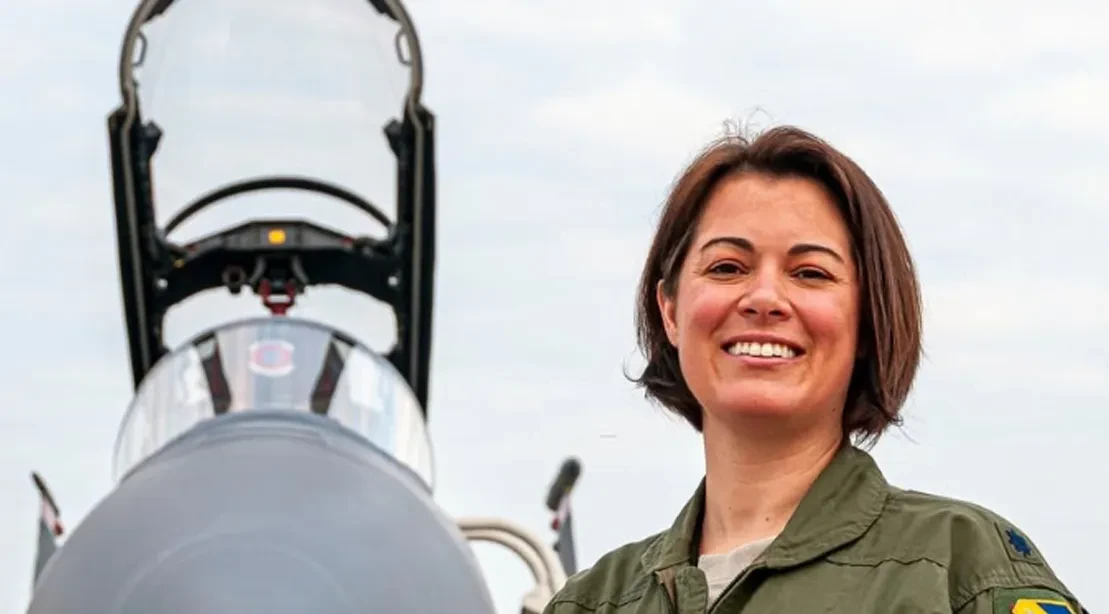
**Physical Resilience: Navigating the Strains of High-Speed Flight**
Top Guns: The Next Generation: The Rigorous Path to Elite Aviator Excellence
Each year, approximately 150 aspiring pilots embark on the arduous journey to become Top Gun pilots at Naval Air Station Meridian, Mississippi—a process fraught with extreme challenges, from supersonic dives (reaching speeds of 575 knots/1,065 km/h) to precision bombing and high-stakes dogfights, all culminating in the prestigious award of flight wings. In National Geographic’s new documentary series Top Guns: The Next Generation, viewers gain unprecedented access to these trainees, revealing the physical and mental rigor required to earn their place in the skies.
For Austin Claggett, this pursuit ignited at age nine, when he was photographed gazing into an F-18 cockpit—a moment that fostered a lifelong fascination with aviation engineering. Unlike many aviators from military backgrounds, Claggett’s passion stems from a steadfast belief in “setting unrealistic goals,” a mindset that propels him to overcome the daunting physical and mental barriers inherent in elite flight training.
Physical Resilience: Navigating the Strains of High-Speed Flight
Aviators like Claggett face unique physiological demands. Sleep and hydration are critical yet often overlooked pillars of performance: dehydration directly impairs G-tolerance, as Claggett explains. “Dehydration reduces your ability to withstand G-forces, meaning you must clench your legs harder to maintain consciousness,” he notes.
The physical toll of supersonic flight is equally significant. Unlike high-end race cars with custom, padded seats, fighter jet cockpits feature minimally cushioned, non-molded seating. This design leads to chronic back strain—a common complaint among pilots—along with neck discomfort during 5G maneuvers. “Your neck becomes unsupported during intense turns, leading to persistent soreness,” Claggett recounts. Additionally, the lack of seat customization subjects the core to continuous stress, requiring constant muscle engagement to maintain stability.
Self-Directed Fitness: Sustaining Peak Performance
To retain their positions, pilots like Claggett undergo rigorous fitness assessments, with the Marine Corps conducting twice-yearly evaluations. Cadets are tasked with designing their own exercise regimens, a process Claggett embraces by combining bodyweight and resistance training to maximize efficiency.
Claggett prioritizes compound movements for limited free time, favoring:
Pistol squats (single-leg strength) and single-leg calf raises for lower-body power.
One-arm pushups (progressing from asymmetric “archer pushups” for gradual skill development) for upper-body endurance.
Hanging leg raises and handstand pushups to strengthen the core and shoulders, respectively.
These exercises target multiple muscle groups simultaneously, aligning with his philosophy that “efficiency in training yields greater results with limited time.”
Mental Fortitude: The Psychology of “Unrealistic Goals”
Claggett’s ethos of “unrealistic goals” is tested daily, particularly during high-stress scenarios like altitude precision maneuvers. “Each challenge teaches me to refine my approach,” he reflects. “Growth is an ongoing journey, not a destination.”
His aspirations extend beyond the cockpit: Claggett envisions careers in aerospace design, motorsport engineering (GT/Formula One), and, ultimately, fatherhood. “I want to inspire my children with stories of perseverance,” he notes.
Top Guns: The Next Generation is now streaming on National Geographic, Disney+, and other major platforms, offering an unfiltered look into the lives of tomorrow’s elite aviators.