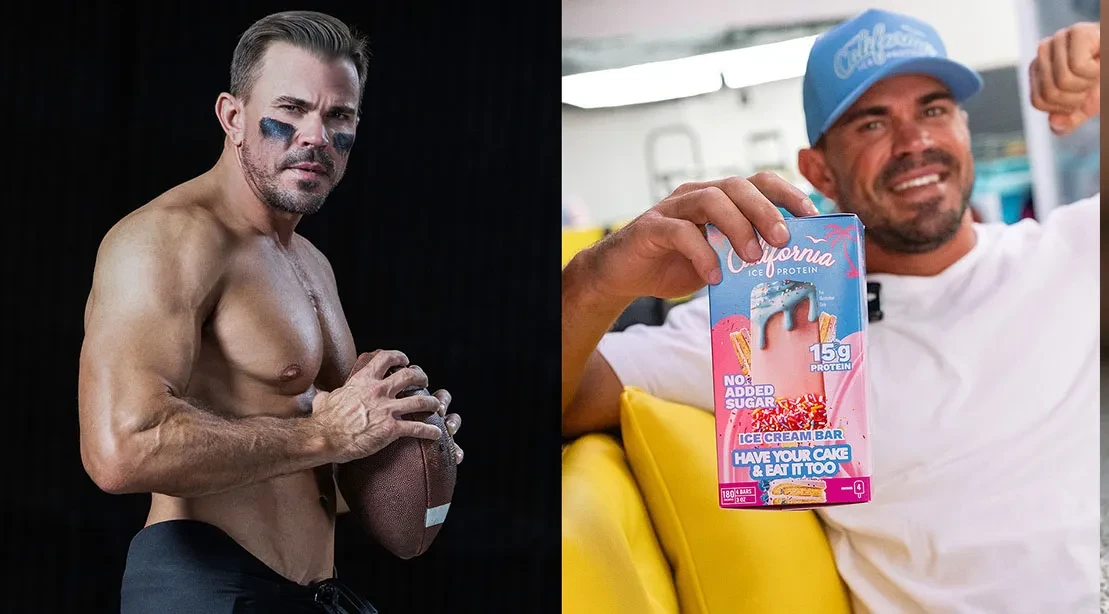
Owen Hanson: From "Cocaine Quarterback" to Ice Cream Entrepreneur
Owen Hanson: From "Cocaine Quarterback" to Ice Cream Entrepreneur
Prime Video’s documentary Cocaine Quarterback unravels the extraordinary arc of Owen Hanson—a former USC football star, convicted drug trafficker, and now, disruptor of the health food industry. This narrative, marked by ambition, downfall, and an improbable redemption, serves as the backdrop to Hanson’s transformation from pariah to legitimate entrepreneur.
From Gridiron to Infamy: A Life in Flux
Hanson’s early dreams of collegiate success were rooted in adversity: raised by a single father in a modest setting, the 6’3” athlete secured a volleyball scholarship to the University of Southern California (USC). His athletic trajectory took a drastic turn when he turned to steroids to gain an edge amid fierce competition, eventually earning a walk-on spot as a tight end on USC’s 2004 national championship team (featuring Heisman Trophy winners Matt Leinart and Reggie Bush).
Post-college, while teammates entered the NFL, Hanson struggled to sustain his real estate business amid the 2008 credit crunch. This instability, combined with his connections to a Tijuana-based cartel, led him down a criminal path. By 2017, he was sentenced to 21 years for money laundering and drug trafficking, reduced to nine years after cooperating with authorities regarding Australian attorney Michael Croke.
Released in 2024, Hanson emerged with a 20-year prison record—and an unexpected innovation born in a 6x8 cell.
The "Mop Bucket Revolution": Invention of a Healthy Treat
While incarcerated, Hanson’s daily routine included protein shakes prepared in a mop bucket (a makeshift freezer in the absence of refrigeration). When the prison ice machine broke, he improvised by adding salt to ice, creating a frozen, protein-rich mixture that he tasted and exclaimed, “This is a protein ice cream!”
This accidental discovery became the foundation of his enterprise: he tested the treat on fellow inmates, selling 15-ounce peanut butter jars of the “ice cream” for $15—yielding a profit comparable to his cartel earnings. His operation scaled to 21 units daily, employing fellow inmates, until guards occasionally confiscated his product. Undeterred, Hanson embraced his role as the “Ice Cream Kingpin,” naming his prison brand Kingpin Creamery.
Redemption Through Business: California Ice Protein
Upon his 2024 release, Hanson lacked direction—until he noticed a gap in the market: high-protein ice cream. Most competitors offered only 5g of protein, while his prison-created treat delivered 15g. He reimagined his formula using natural monk fruit (a sugar substitute), 80% whey protein concentrate, and probiotics for gut health.
Backed by investors, Hanson founded California Ice Protein, a brand now with 30 employees. His flagship product, with flavors like “Coliseum Cookies & Cream” (honoring his USC days) and “Strawberry Swole Cake” (a nod to a supportive teammate), aims to disrupt the $25 billion global protein snack market.
Remorse, Responsibility, and Legacy
Hanson openly acknowledges his guilt: “I’m remorseful for getting all these people involved in this catastrophe… I never intended to get them in trouble.” He has apologized to 95% of the 20 friends and associates he inadvertently indicted, many of whom have reconciled.
His MBA, earned in prison, now fuels his business acumen. He advocates for internships to guide young entrepreneurs and vows to “turn a new leaf.” With plans to expand to Gelson’s and Whole Foods, Hanson’s mission is clear: “Prove that I can be successful with anything I put my energy into.”
Conclusion
Owen Hanson’s journey—from “Cocaine Quarterback” to “Ice Cream Kingpin”—epitomizes resilience. As he prepares to scale his brand, his story underscores the power of reinvention.
For more on California Ice Protein, visit californiaiceprotein.com.
Don’t bet against him.