Declan Farmer: A Paralympic Athlete’s Journey of Adaptation and Triumph
Declan Farmer: A Paralympic Athlete’s Journey of Adaptation and Triumph
Introduction
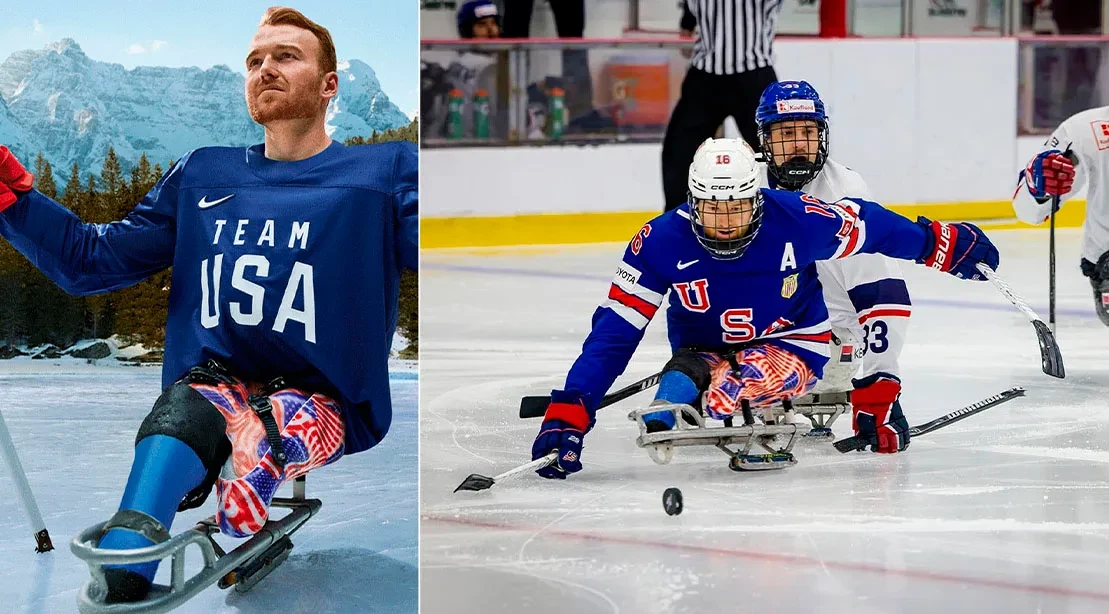
Declan Farmer has consistently transcended societal limitations throughout his life. Born with bilateral fibular hemimelia—a congenital condition characterized by the absence or underdevelopment of the fibula—he was born without functional legs and underwent bilateral leg amputations in infancy. However, at the age of 9, he embraced sled hockey, a sport that would propel him to become one of the most renowned athletes on the global circuit, aiding Team USA in securing gold medals across five World Championships and three Paralympic Games. As the 2026 Paralympic Games in Milano Cortina approach (just 100 days away), this Tampa-born hero continues to confront daily challenges, offering a glimpse into the highs and lows of his preparatory journey.
Early Life and Athletic Foundations
Farmer’s athletic trajectory began in earnest with his introduction to sled hockey at age 9, a decision that defied expectations of a life confined by disability. “As an individual with bilateral leg prosthetics, my fitness regimen is extensive,” he explains, recalling his early gym experiences starting in school and later frequenting a local YMCA in Tampa. “I prioritize leg strength and balance training to enhance daily mobility, walking efficiency, and overall longevity,” he emphasizes.
By his mid-teens, Farmer transitioned to training at a sports performance facility alongside elite athletes, a pivotal experience that alleviated gym-related social anxiety—a common barrier for many individuals. His formative years in structured fitness environments laid the groundwork for his resilience, even as he navigated the unique demands of his sport.
Training Adaptations for Asymmetry
Sled hockey, while demanding similar functional movements to able-bodied sports, presents distinct challenges for Farmer. “One amputation is above the knee, the other below,” the athlete clarifies, highlighting an inherent biomechanical asymmetry. “This requires targeted adaptations: I focus on balance training and unilateral exercises to ensure each limb functions independently.”
For Farmer, the sport demands a holistic skill set: “Cardio, strength, mobility, and balance are all critical. There’s no single area that can be neglected.”
Footwear and Mobility: Key Adaptations
A critical adjustment for Farmer involves footwear. “Very flat, neutral shoes—approaching barefoot conditions—are optimal for walking,” he notes. “I frequently experiment with varying heel widths and configurations to prevent gait disruptions, as even minor changes can affect stability.”
Inclusivity in Para-Athletics
The Paralympic movement thrives on adaptability, and Farmer underscores the importance of inclusive training environments. “Teammates using wheelchairs must navigate tighter spaces and avoid overly complex equipment setups,” he explains. “However, with time, athletes grow creative, devising routines that suit their needs. The Paralympic ethos is about expanding access for all with disabilities.”
Advocating for Professional Sled Hockey
Despite his on-ice success, Farmer advocates for fair compensation in para-sports. “Pay should reflect commitment and value,” he argues. “Sled hockey has grown with support, but a professional league remains a priority. The U.S. model for women’s able-bodied hockey—evidenced by the upcoming Professional Women’s Hockey League—serves as inspiration; we aim to replicate this growth for disabled athletes.”
Preparations for Milano Cortina
Residing near the U.S. Olympic & Paralympic Training Center in Colorado, Farmer will relocate to northern Italy for January and February to participate in an intensive training camp. “There, we will finalize four years of preparation,” he states. “Our focus: refining scoring and offensive skills to elevate performance.”
Delta Air Lines: A Lifeline for Accessible Travel
A cornerstone of Farmer’s Paralympic journey is Delta Air Lines, thanks to his mother’s role as a flight attendant and the company’s commitment to accessibility. “As the official airline of Team USA, Delta streamlines travel logistics,” he notes. “For disabled athletes, this means no extra fees for medical equipment, and accommodating wheelchair access to gates and seating.”
Current Training Focus
With the Games approaching, Farmer emphasizes technical refinement. “Our team excels defensively in skating and creativity,” he reflects. “However, skill work—especially offensive precision—will be our primary focus to ensure peak performance.”
Conclusion
Declan Farmer’s story embodies resilience, adaptability, and the Paralympic spirit of inclusion. For updates, follow him on Instagram.
[Note: The initial "28-Days-to-Lean Meal Plan" reference appears to be a contextual error and has been omitted as it does not align with the narrative.]